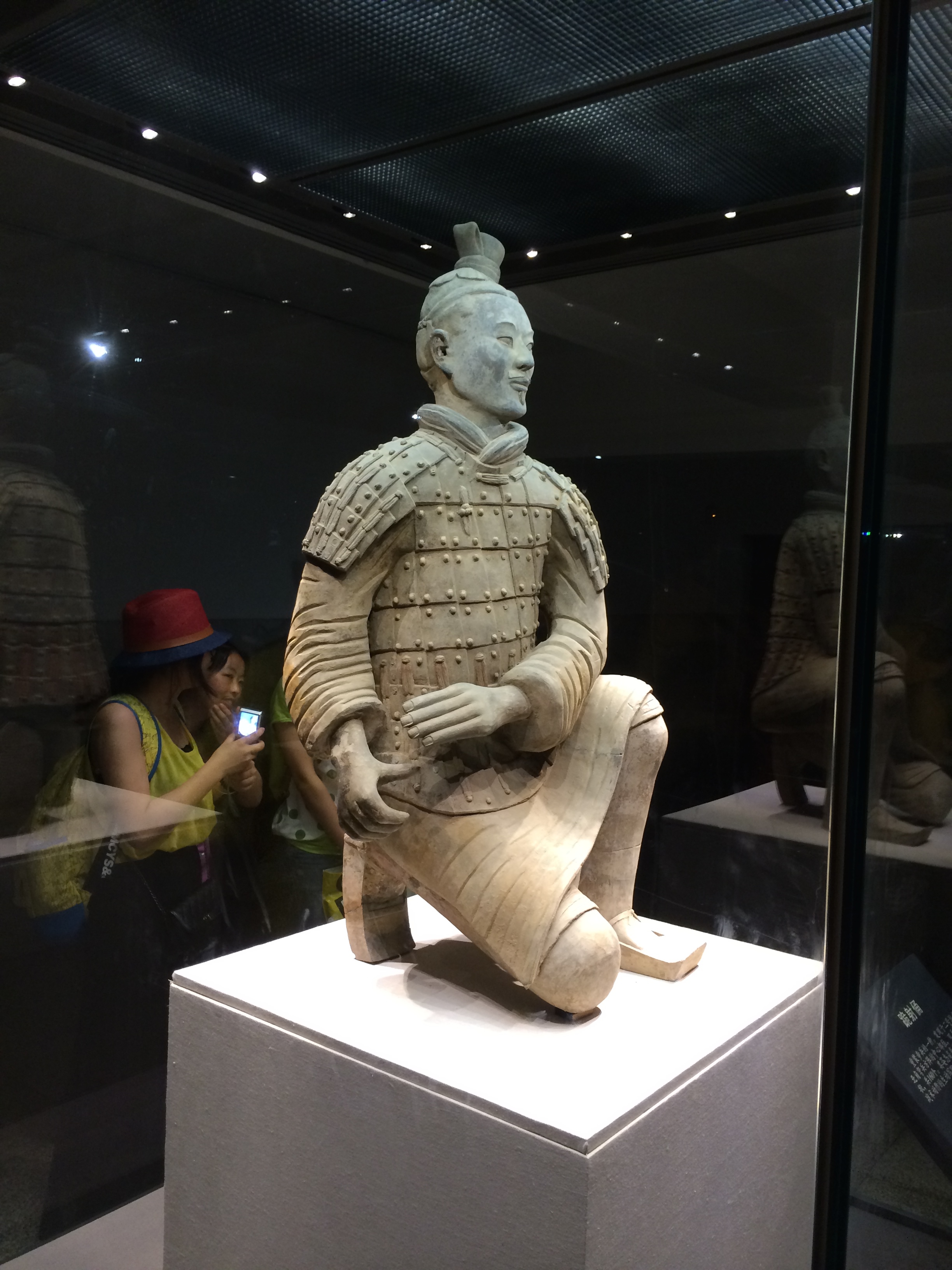
At the age of 13 (in 246 BC) , Qin Shi Huang, the first emperor of China, began his mausoleum. It took him 11 years to finish it. The tomb included, 8,000 life-size warriors all with unique faces and bodies believed to be models of the actual warriors in his army, 130 chariots, 520 horses and 150 cavalry horses.
Discovered in 1976 by a farmer digging a well, the Terra Cotta Warriors and horse are truly amazing. The farmer is still alive and sits at the archeological site most days with his book. I met him and yes, I have his signature and book.
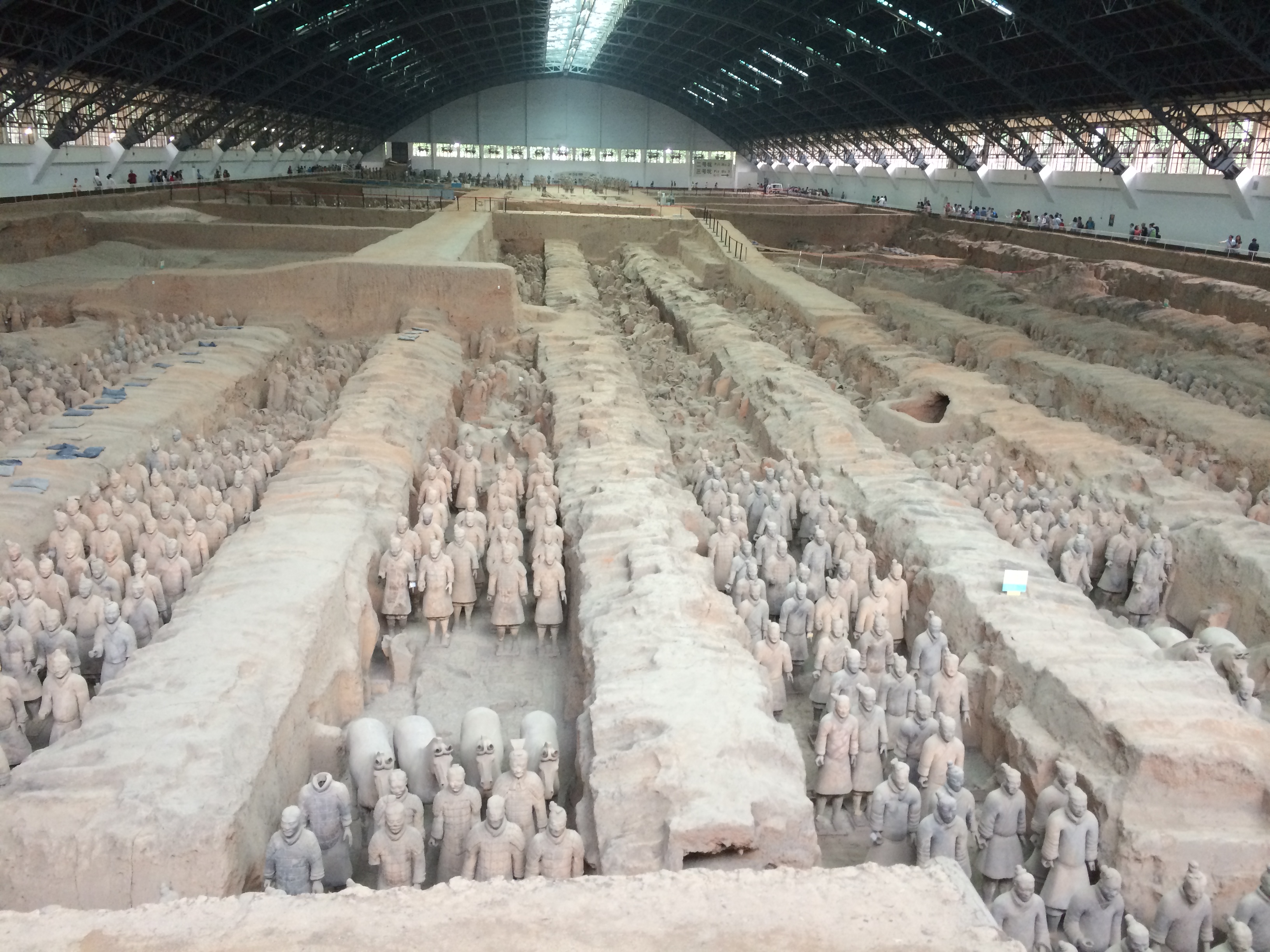
This is pit 1, there are 3 other main pits and many areas that have not been unearthed yet.
Each warrior was made in a government workshop. Heads, arms, legs and toros were created separately then assembled. Each warrior varied in height, uniform, and hairstyle in accordance with their rank. Each was painted, provided a weapon and then placed in a military formation according to rank and duty to surround the tomb of the emperor.
We spent a long weekend in Xian, which is about 900 miles north west of Shanghai. Our guide told us it was a small city by China standards – only 6.5 million people. In addition to the warriors, we visited the Big goose Pagoda, the bell tower, and walked the city wall.
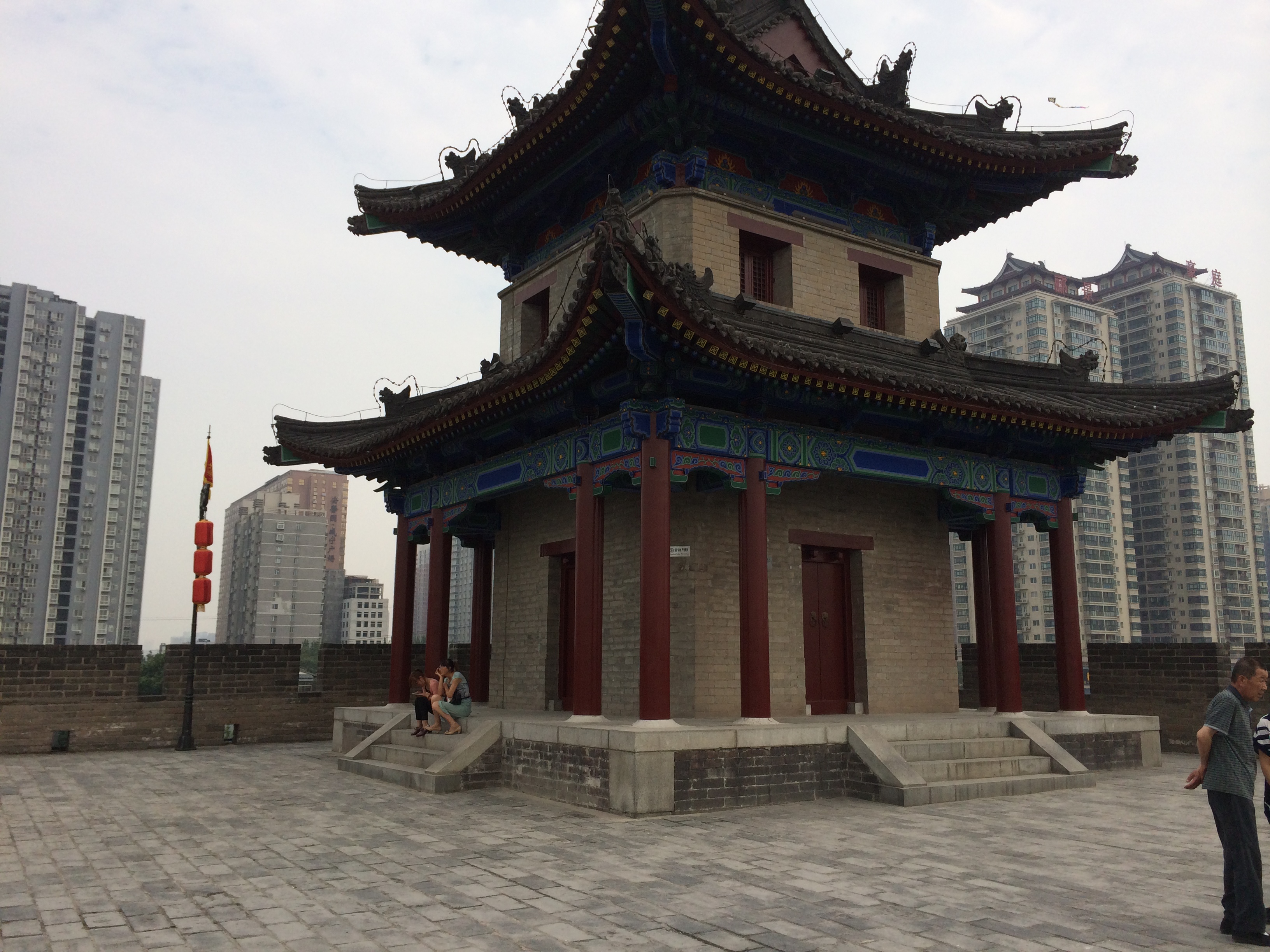
The city wall surrounds the inner city and is the most complete wall to survive in the country. It was built in the Ming Dynasty (1368-1644) and was renovated recently. You can rent a bike and travel the 13.7 KM loop if you like. It was very hot when we were there so we opted for a short walk and a cold drink.

 A Foodie's Travels
Fascinating. Thanks for the posts of your tours.